Oh Father at 37
Thirty-seven years ago, Madonna released one of the most exposed tracks of her career.
Issued in the United States on 24 October 1989 as the fourth single from Like a Prayer, “Oh Father” was strikingly different from the record’s more immediate pop moments. There was no obvious hook designed to seize radio, no dancefloor release and very little attempt to soften what was being said.
Instead, Madonna turned inward.
The Moment
Like a Prayer had already revealed a more autobiographical Madonna.
Family, faith, grief, marriage and childhood were no longer merely background influences; they had moved directly into the work.

Express Yourself

Promise to Try

Cherish

Like A Prayer
Written and produced with Patrick Leonard, Oh Father sits at the centre of that shift. The arrangement is restrained and cinematic, built around piano, strings and a vocal performance that frequently sounds less like a pop star projecting outwards than somebody trying to make sense of something privately.
The title suggests confrontation.
The track itself is more complicated.
There is anger, certainly, but also fear, resignation, affection and the recognition that childhood relationships rarely fit comfortably into simple categories.
That ambiguity gives Oh Father much of its power.
The Image
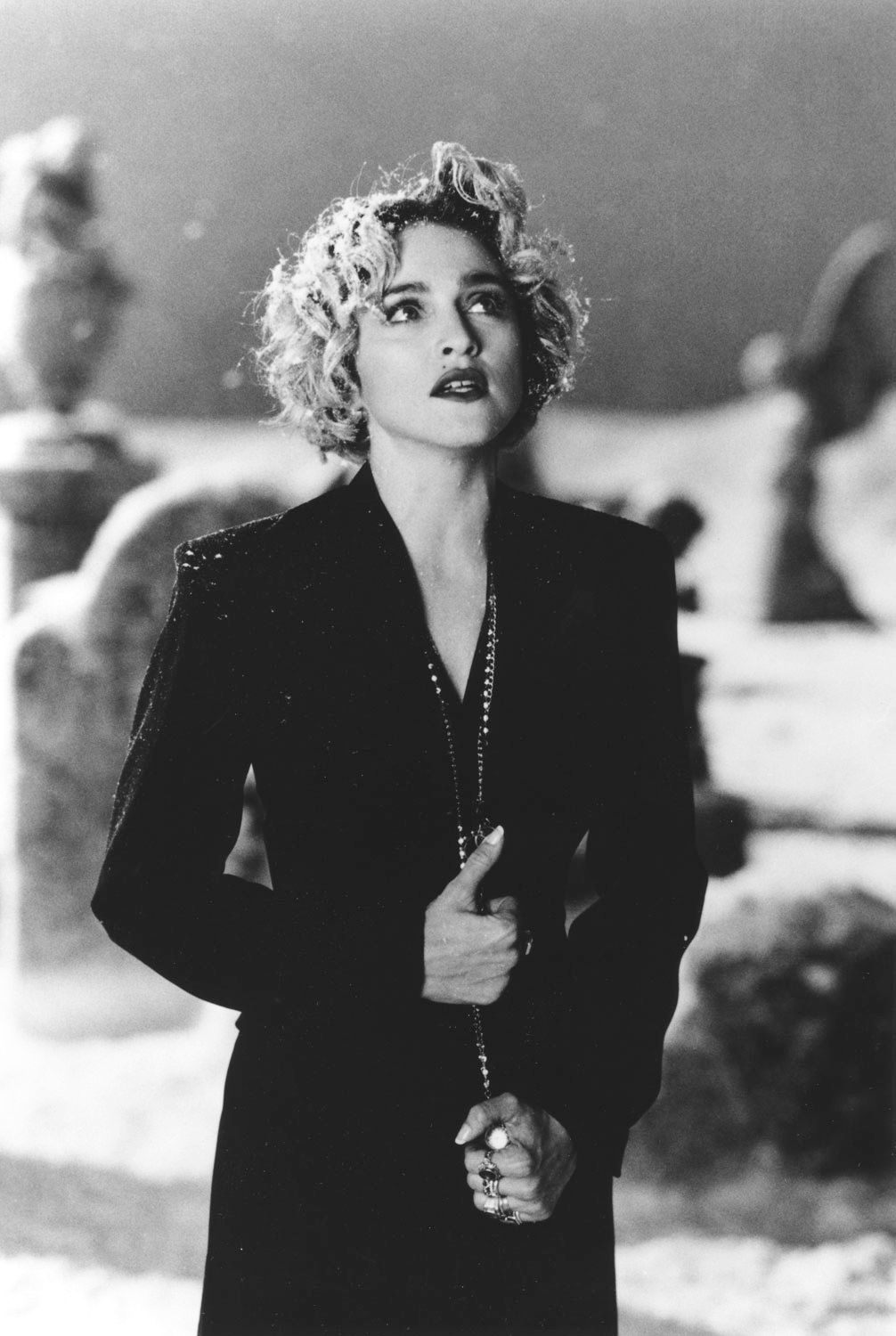
David Fincher’s black-and-white video made the autobiographical implications impossible to ignore.
Inspired visually by Citizen Kane, it moves between an adult Madonna and a young girl dealing with loss, an emotionally distant father and the aftermath of her mother’s death. Madonna’s official site describes the video as seemingly inspired by Orson Welles’ film, while Fincher’s stark photography gives the track the atmosphere of remembered childhood rather than straightforward narrative.

One image remains particularly difficult to forget: the child approaching her mother’s coffin and seeing that the dead woman’s lips have been sewn shut.
It is beautiful, disturbing and deliberately unsentimental.
There are very few Madonna videos in which performance becomes so secondary to memory.
What Happened Then
Commercially, Oh Father was an unusual Madonna track.
In the United States it reached No. 20 on the Billboard Hot 100 and remained on the chart for thirteen weeks.
Britain initially took a different route through Like a Prayer. Dear Jessie was issued instead, meaning Oh Father did not receive a UK single release during the original 1989 campaign. Official Charts notes that it finally reached Britain six years later, following its inclusion on Madonna’s 1995 ballads collection Something to Remember.


When it eventually charted in January 1996, it entered at No. 16.
That was modest by Madonna’s standards.
But Oh Father was never particularly interested in behaving like a conventional Madonna hit.
Thirty-seven Years Later
Time has been kind to it.
Removed from the expectation that every Madonna single should dominate the charts, Oh Father now feels like one of the essential pieces in understanding Like a Prayer.
The record is often remembered through its largest gestures: the title track, Express Yourself, Cherish.


Oh Father reveals something quieter underneath them.
This was Madonna beginning to understand that vulnerability could be as powerful a creative tool as provocation.
And unlike some autobiographical pop, the track does not arrive at a neat resolution. The adult can recognise what happened. She can survive it. She can even begin to understand the person who caused the hurt.
That does not mean the hurt disappears.
Why It Matters
Oh Father matters because it allowed Madonna to stop performing certainty.
The track occupies the uncomfortable territory between accusation and forgiveness, childhood and adulthood, love and resentment. Patrick Leonard’s elegant production gives Madonna the space to inhabit those contradictions rather than resolve them.

Its relative lack of commercial impact almost feels beside the point now.
Some tracks exist to define an era.
Others explain the person moving through it.
Oh Father does the latter.


Leave a Reply