Album
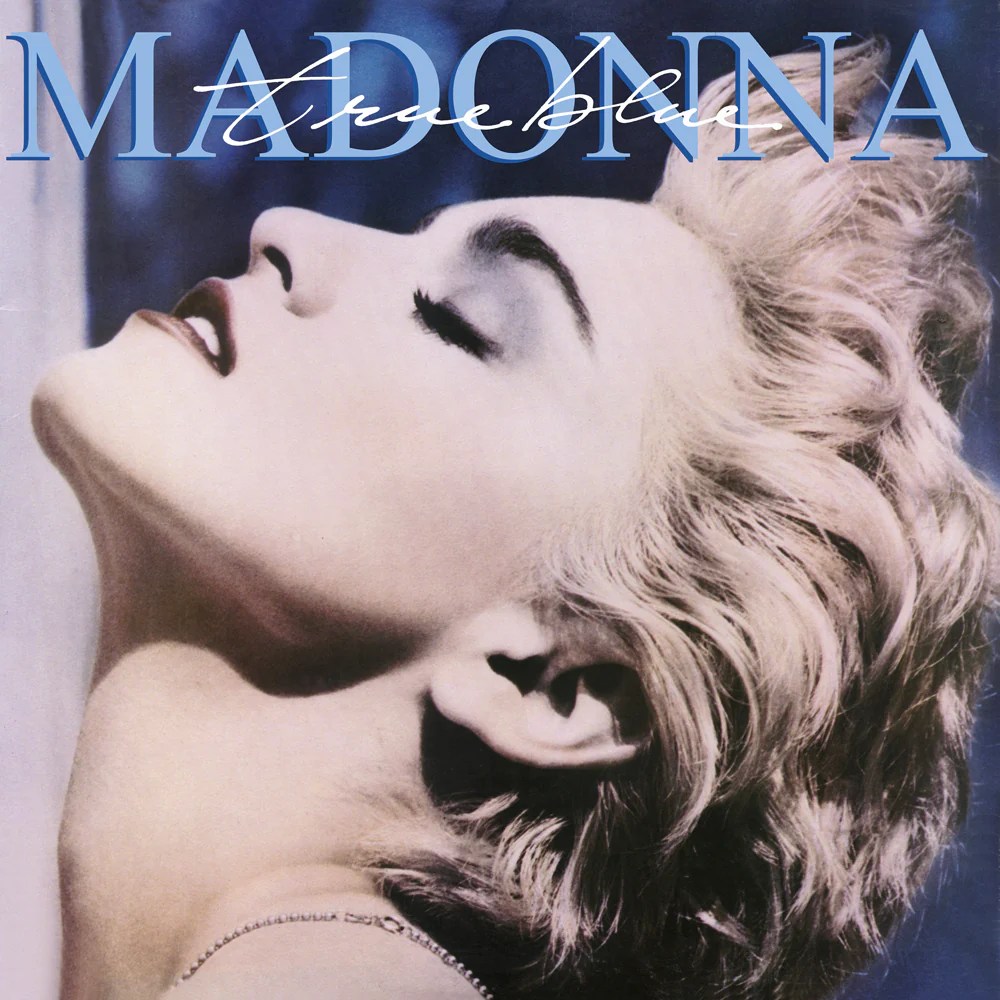
Released in 1986, True Blue captures Madonna at the moment her pop stardom became global certainty. Brighter, more polished and more emotionally direct than her earlier albums, it blends dance-pop, classic pop melody, Latin colour, girl-group echoes and cinematic balladry into a record built for scale. Working with Patrick Leonard and Stephen Bray, Madonna shaped an album that expanded her sound while strengthening her authorship. True Blue is romantic, confident, playful and ambitious: the sound of an artist turning fame into empire.
True Blue
30 June 1986
Madonna, Stephen Bray, Patrick Leonard
Dedicated to then-husband Sean Penn
Shire Records
Track list
- Papa Don’t Preach
- Open Your Heart
- White Heat
- Live to Tell
- Where’s the Party
- True Blue
- La isla Bonita
- Jimmy Jimmy
- Love Makes the World go Round
True Blue remains one of Madonna’s most important albums because it proved she could move beyond provocation and personality into fully controlled pop craftsmanship. Its songs are immediate and melodic, but beneath the shine sits a sharper understanding of image, emotion and mass appeal. The album balances innocence and confidence, romance and independence, sweetness and steel. More than a commercial triumph, True Blue marked the arrival of Madonna as a complete pop architect: singer, writer, image-maker and cultural force.
Singles
The singles from True Blue revealed the album’s exceptional range and its instinct for pop permanence.
Live to Tell arrived first as a dramatic, adult ballad, showing a quieter and more mysterious Madonna. Papa Don’t Preach followed with narrative urgency and social controversy, while True Blue offered retro-pop romance and bright devotion. Open Your Heart returned to desire, confidence and dance-pop command, and La Isla Bonita brought Latin influence, atmosphere and longing into one of Madonna’s most elegant singles campaigns.
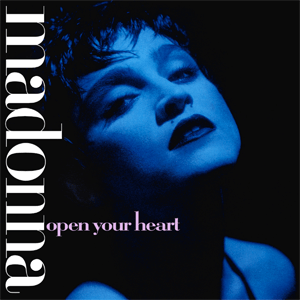
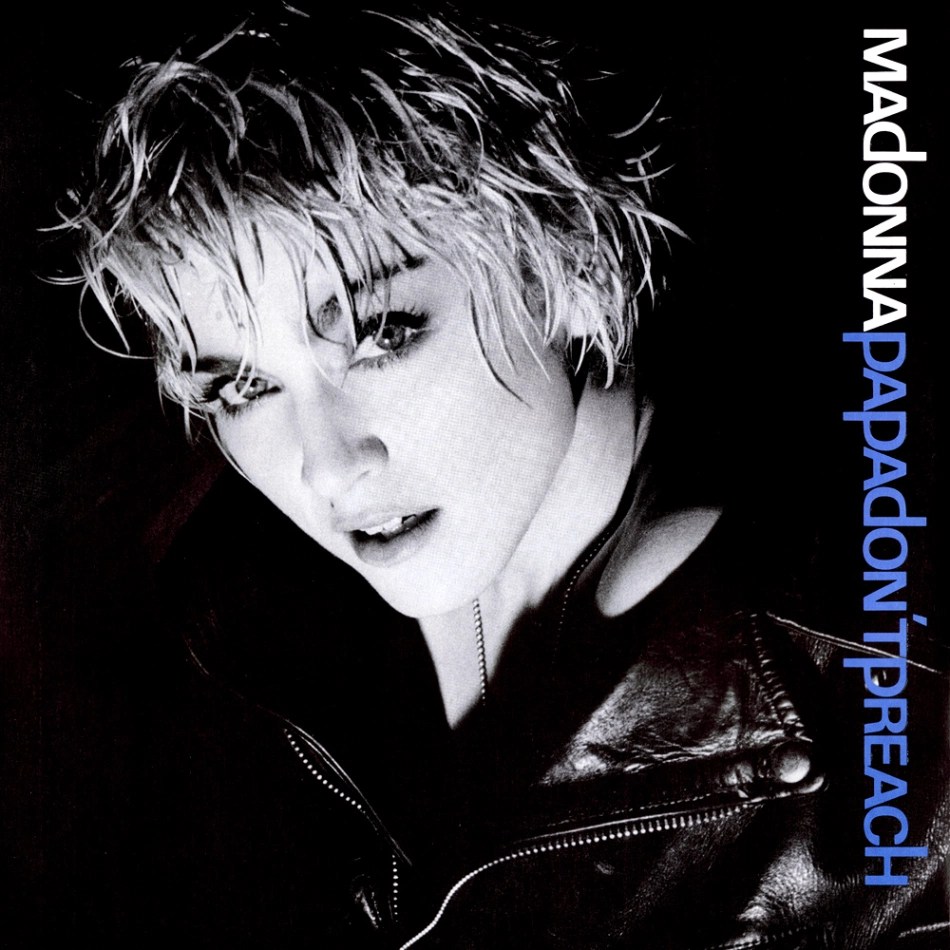
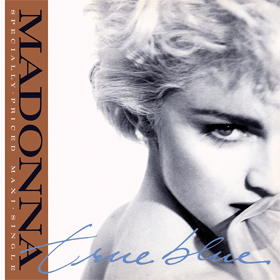
Across its singles, True Blue showed Madonna mastering the art of the pop era. Each release opened a different door: confession, controversy, romance, seduction and escapist fantasy. Together, they made the album feel expansive without losing cohesion. The campaign confirmed that Madonna could dominate charts while changing tone, image and emotional register from single to single. True Blue did not simply produce hits; it built a world where every song sharpened her command of pop culture.
Visuals
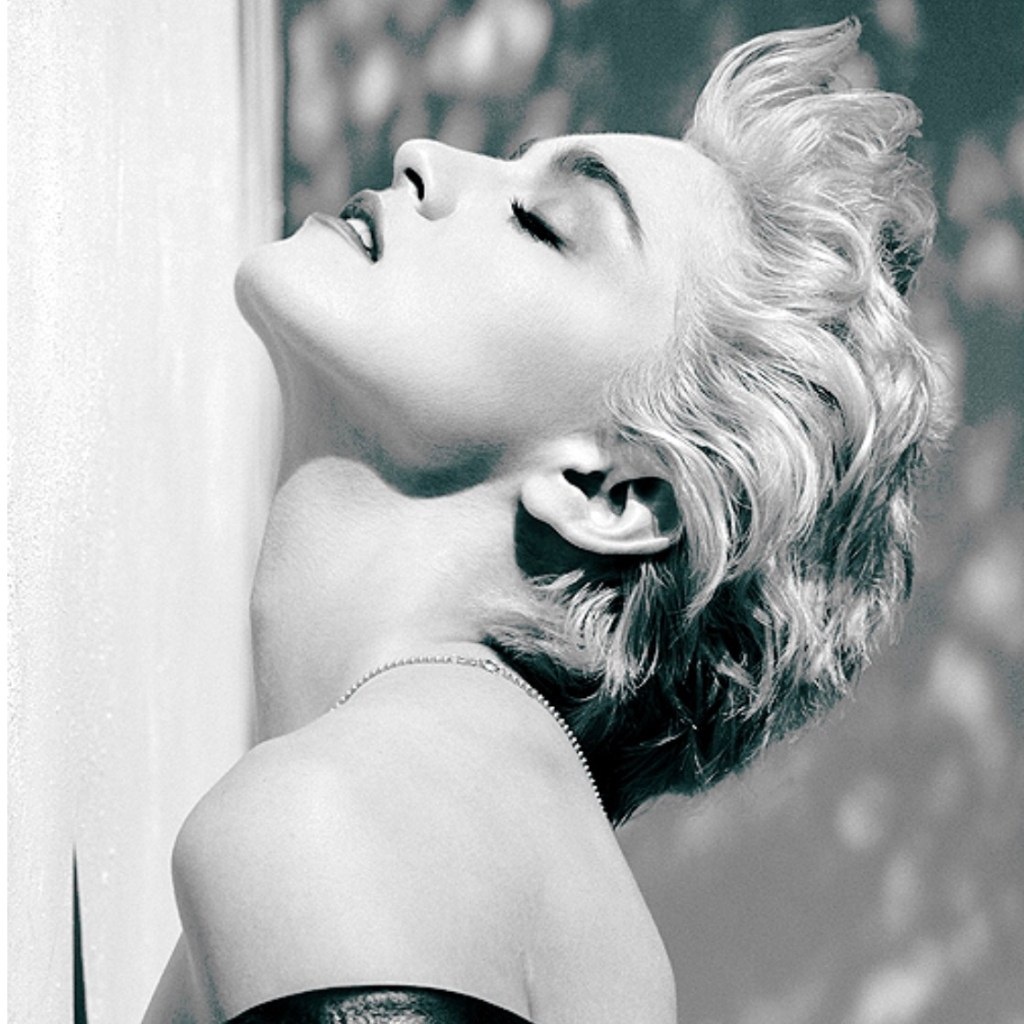
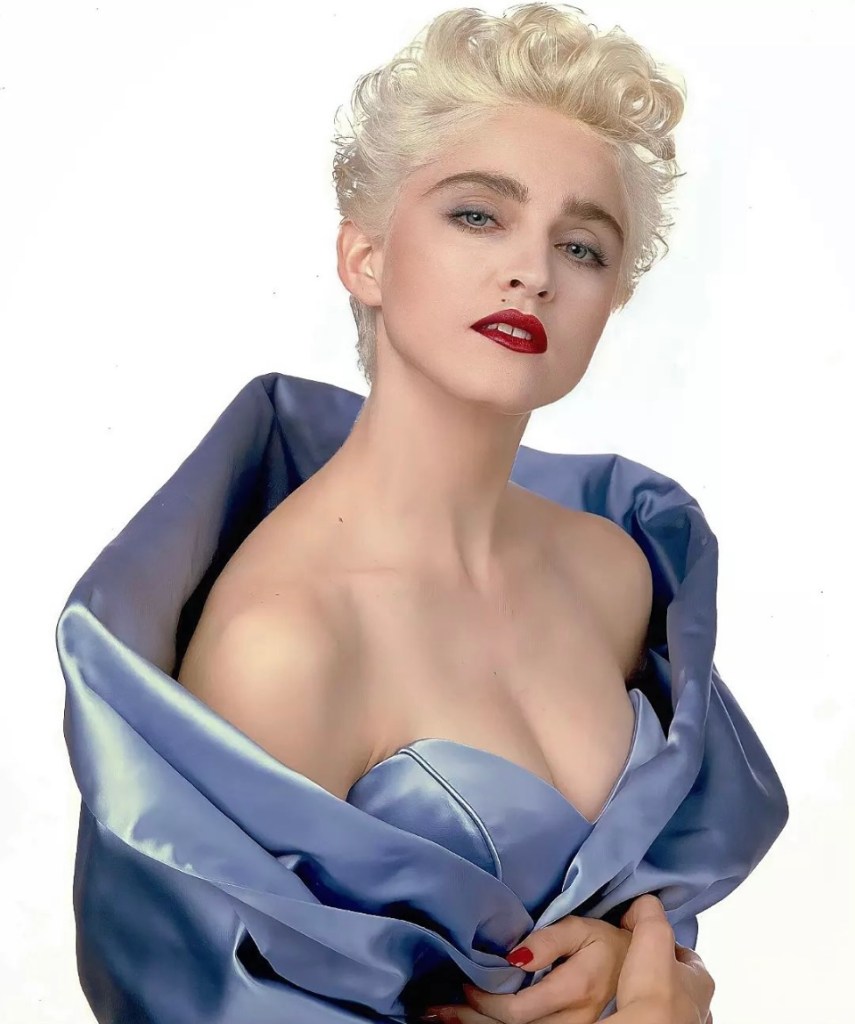
Visually, True Blue created one of Madonna’s most iconic and refined transformations. The era moved away from the streetwise chaos of her early image into something sleeker, cooler and more cinematic: platinum hair, sculpted styling, blue-toned photography, 1950s and 1960s references, leather jackets, red lips and Hollywood glamour. Madonna’s image became cleaner but no less charged, combining romantic softness with absolute control.
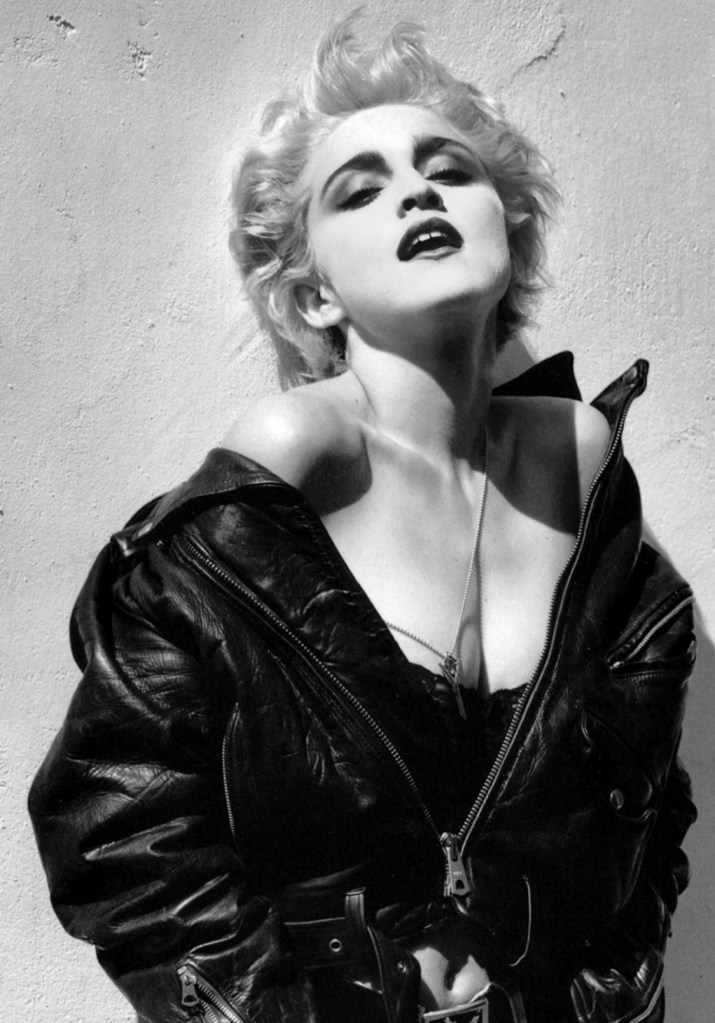
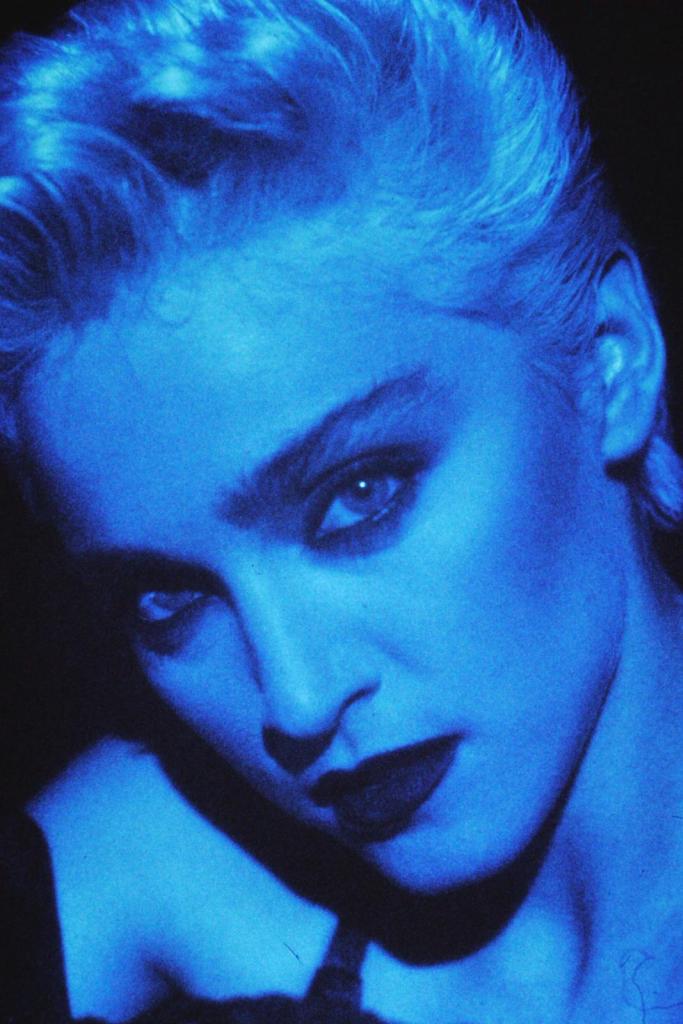
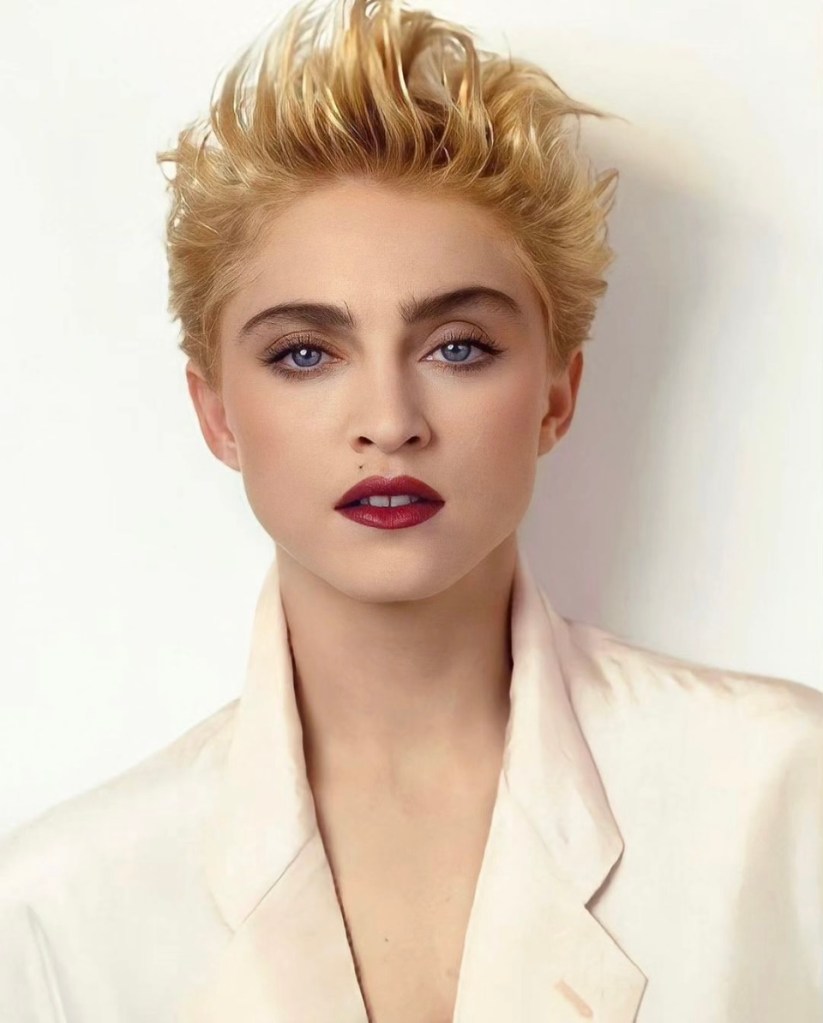
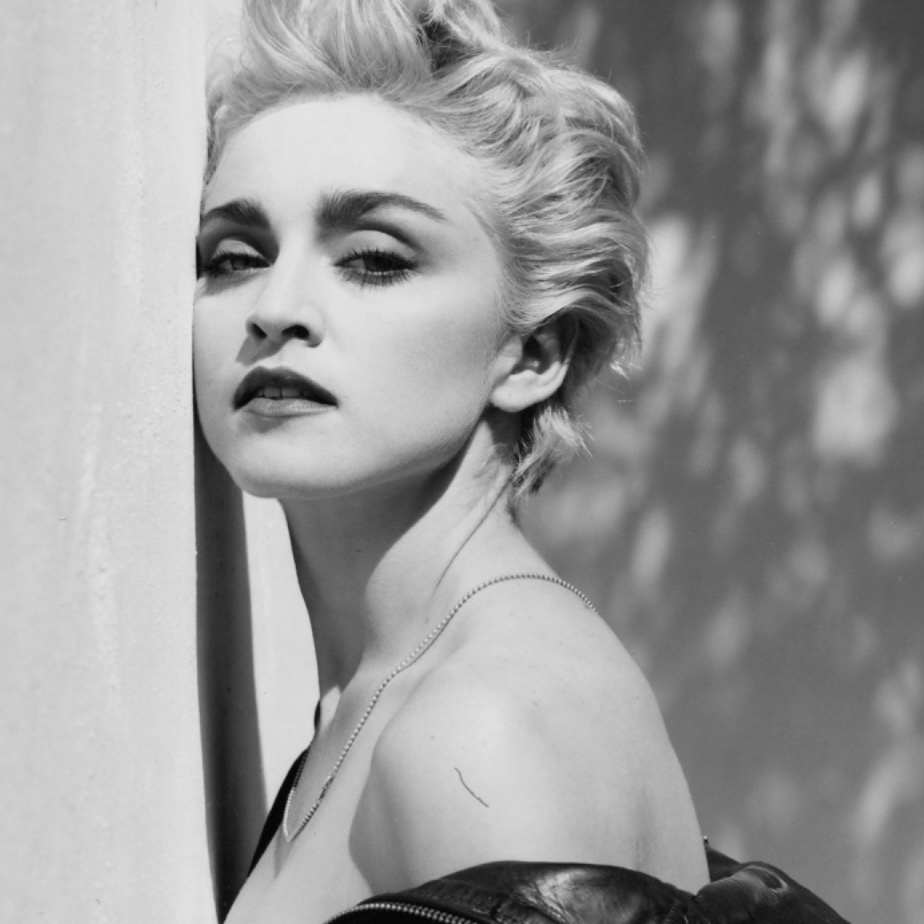
The visual world of True Blue endures because it made reinvention look effortless while tightening every part of Madonna’s public identity. From the Jean-Baptiste Mondino album imagery to the emotional restraint of Live to Tell, the controversy and drama of Papa Don’t Preach, the retro charm of True Blue and the dreamlike romance of La Isla Bonita, the era proved that image could carry narrative as powerfully as sound. In True Blue, Madonna became less a rising star than a fully designed pop phenomenon: polished, watchful and impossible to dislodge.
Designed with WordPress
 Madonna