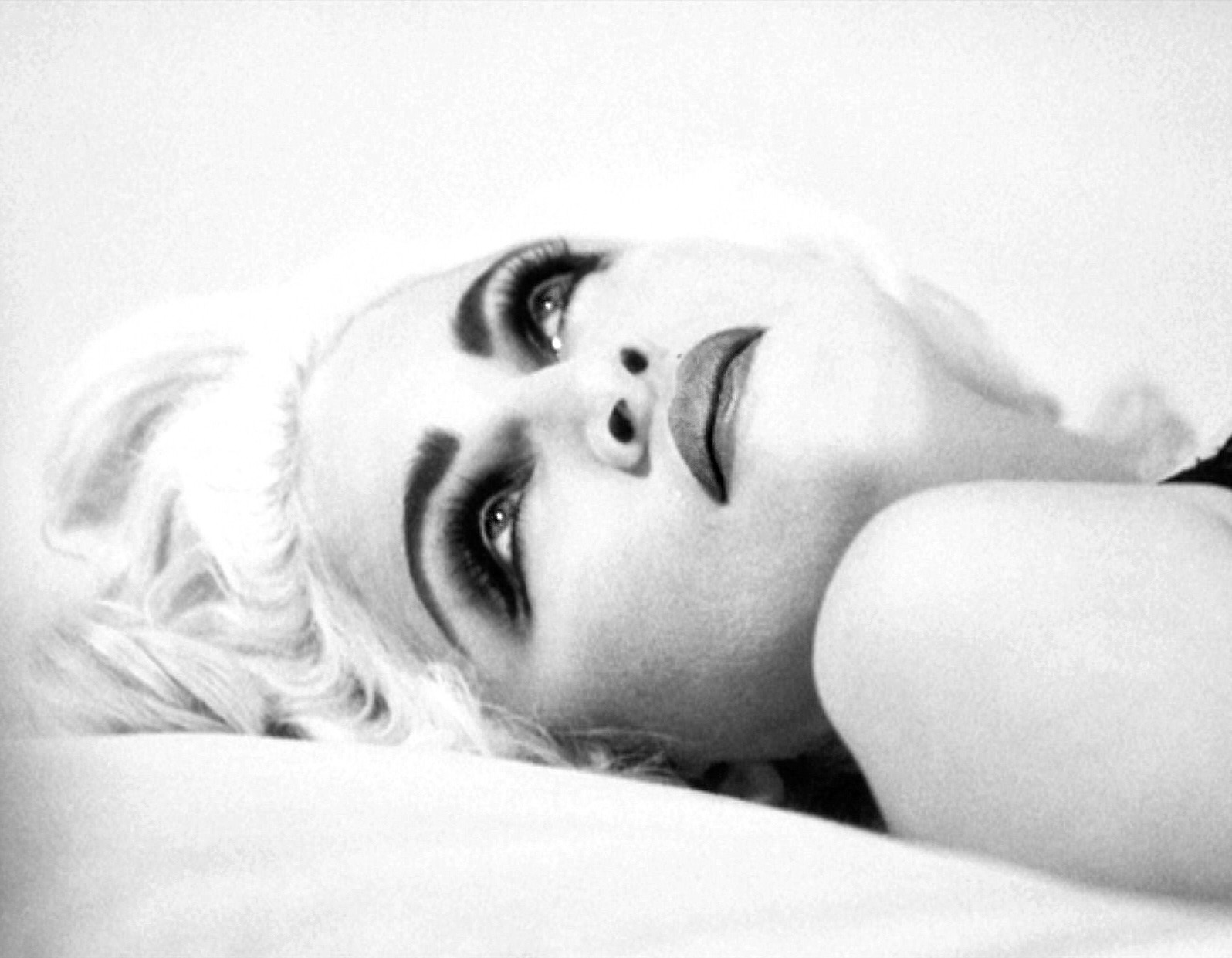
Erotica Record at 34
Desire, defiance and the record that refused to behave
On 20 October 1992, Madonna released Erotica, a record that arrived carrying so much cultural baggage that, for years, it was almost impossible to hear it clearly.
There was Sex, the metal-bound book published alongside it. There were headlines, television debates, moral outrage and the growing conviction that Madonna had finally gone too far. Sexuality had always been part of her work, but in 1992 it became the lens through which almost everything she did was viewed. The music was no longer simply discussed. It was prosecuted.
Thirty-four years later, much of that noise has faded.

What remains is a record far stranger, sadder and more sophisticated than the scandal surrounding it ever allowed. Erotica is certainly about sex, but it is equally about loneliness, rejection, grief, fantasy, power, jealousy and emotional survival. It is a record built for the nightclub but haunted by what happens after everyone has gone home.
Perhaps the great misunderstanding of Erotica is that people heard the sex before they heard the record.
AFTER THE IMMACULATE
By the beginning of the 1990s, Madonna had reached a point most artists spend an entire career attempting to reach.
The Immaculate Collection had gathered together a remarkable run of pop records and, in doing so, seemed almost to draw a line beneath the first great phase of her career. The Madonna of Like a Virgin, True Blue and Like a Prayer had become one of the defining cultural figures of the previous decade.
Consolidation would have been the obvious next move.
Madonna chose demolition instead.


Rather than make another immaculate pop record, she moved towards something murkier. The colours darkened. The production became leaner. The imagery became confrontational. The cheerful accessibility of much of her 1980s work was replaced by ambiguity.
This was also the beginning of Maverick, the entertainment company Madonna established with Time Warner. Artistically and commercially, she was entering a new level of control at precisely the moment she was producing some of her least accommodating work.
The wider world around Erotica mattered too.


The AIDS crisis continued to devastate communities, particularly gay communities central to Madonna’s audience and creative world. Arguments about sexuality, censorship and queer visibility were taking place in public with enormous political and emotional consequences.
Against that background, Erotica does not sound like a simple exercise in provocation.
It sounds like a record very consciously inhabiting its moment.
UNDERGROUND
The sound of Erotica is one of its greatest strengths.
Working principally with Shep Pettibone, alongside André Betts, Madonna turned towards the rhythms and textures of early-1990s New York club music. House, hip-hop, samples, loops and spoken vocals move through the record with surprisingly little interest in conventional pop gloss.

Even the title track feels almost anti-pop.
Erotica arrives through a low, hypnotic groove, with Madonna slipping into the character of Dita and delivering the vocal with controlled detachment. It is seductive, but not warm. The track operates through repetition, tension and suggestion rather than a conventional explosion into chorus.

Elsewhere, the record constantly changes temperature.
“Deeper and Deeper” is one of Madonna’s great dance tracks, ecstatic on the surface yet emotionally unsettled beneath it. “Fever” transforms the standard into something sleek, minimal and nocturnal. “Thief of Hearts” is sharp with anger. “Waiting” circles around romantic frustration with a weary sophistication.
And then there is “Rain”.
Placed within this world of hard beats and sexual theatre, “Rain” feels almost startlingly tender. Its romantic openness provides one of the clearest reminders that Erotica was never emotionally one-dimensional.


The same is true of “In This Life”, one of the record’s most devastating moments.
Written in response to lives lost to AIDS, it removes much of the armour surrounding the album and confronts grief directly. Suddenly the vocabulary of bodies and intimacy carries another meaning entirely.
That tension runs throughout Erotica.
The body can be a source of pleasure, control and fantasy.
It can also disappear.
SEX
It is impossible to separate Erotica entirely from Sex. The two projects arrived together and were clearly connected.

Madonna was examining fantasy, voyeurism, role-play, power and sexual identity across music, photography and film. She was deliberately collapsing the boundaries between pop star, character and author.
But the sheer scale of the reaction altered the way the record itself was received.
The book became an event.
Images circulated. Newspapers reacted. Television programmes debated whether Madonna had crossed some invisible cultural boundary. The conversation became less about what she was making and more about whether she should have been allowed to make it at all.
Erotica became caught inside that argument. Its complexity was flattened into a single word: sex. Yet listen closely and the record repeatedly complicates its own eroticism.


Desire in Erotica is rarely uncomplicated. It involves negotiation, distance, jealousy, role-playing and control. Characters want each other, mistrust each other, abandon each other and sometimes attempt to protect themselves by pretending not to care.
The record understands something pop music often prefers to avoid. Sex and intimacy are not the same thing. One can exist without the other. And much of Erotica seems fascinated by the gap between them.
THE PUNISHMENT
The question surrounding Erotica was never simply whether Madonna had become controversial. She had been controversial for years. The more interesting question is why the reaction in 1992 felt different.
Something had shifted.
The woman who had previously been praised for controlling her sexuality was increasingly accused of displaying too much of it. The same appetite for provocation that had helped construct her fame began to turn against her.
There was a strange sense of public exhaustion.

Madonna was everywhere: the record, the book, photographs, interviews, films. The saturation itself became part of the story, and critics began discussing not merely the work but the supposed limits of Madonna’s cultural permission.
How much Madonna was too much Madonna? For me, there is never enough Madonna!
The question carries an unmistakable double standard.
Male artists had long been permitted to turn sexuality, excess and self-mythology into artistic identities. Madonna’s insistence on doing the same while remaining the author of her own image was treated differently.
The criticism was not simply that she was sexual.
It was that she appeared unwilling to ask anyone’s permission.

The commercial narrative surrounding Erotica has also grown distorted with time.
Compared with Madonna’s extraordinary achievements during the previous decade, it represented a change in momentum. But treating the record as some kind of commercial disappearance ignores the scale on which Madonna was still operating.
What changed most dramatically was the atmosphere. The conversation around Madonna became harsher. And rather than retreat, she took Erotica onto the road.

The Girlie Show made no attempt to reassure anyone.
Instead, Madonna transformed the era into theatre: cabaret, circus, gender play, choreography, spectacle and sexuality collided inside one of her most audacious tours.
If the world wanted an apology, it received a show.
WHAT REMAINS
Time has been unusually kind to Erotica.
Perhaps that is because time has removed the obligation to react to it.
We no longer have to stand in 1992 deciding whether Madonna has gone too far. We already know she survived. The controversy now sits at a distance, leaving the music far easier to examine on its own terms. And the record that emerges is remarkably coherent.


Its production remains spare and physical. Its themes remain complicated. Its atmosphere remains unmistakable. Even its imperfections contribute to the sense of a record interested in mood and exploration rather than immaculate pop architecture.
It also occupies a crucial place in Madonna’s wider body of work.
Without Erotica, the transitions that followed become harder to understand.
The introspection of Bedtime Stories, the spiritual and electronic transformation of Ray of Light, and even the later political and experimental impulses of her work all belong to an artist who had already discovered that reinvention sometimes required risking rejection.
Erotica was one of those risks.
It changed the relationship between Madonna and her audience because it removed the guarantee that she would always give people the version of Madonna they wanted.
That may be its greatest legacy.


Thirty-four years later, the scandal has become history.
The record has not.
Beneath the leather, photography, headlines and arguments was always something more enduring: a record about what happens when desire meets loneliness, when pleasure collides with loss and when control begins to slip from the person who thought she possessed it.
Erotica no longer needs rescuing from its reputation.
It has already outlived it.




Leave a Reply