Album
Evita is the moment Madonna steps fully into character and lets the voice carry the transformation. After the reflective polish of Something to Remember, this soundtrack places her inside one of musical theatre’s most demanding roles: Eva Perón, a woman built from ambition, performance, contradiction and public devotion. It is not a conventional Madonna studio album, but it is absolutely part of the Madonna story. Here, reinvention becomes discipline.
The album asks Madonna to do something different from pop dominance. Instead of bending a genre around her own image, she enters an existing theatrical world and proves she can hold it. The result is formal, cinematic and emotionally exposed. Songs such as “Buenos Aires”, “Another Suitcase in Another Hall”, “You Must Love Me” and “Don’t Cry for Me Argentina” show a performer working through control, vulnerability and grandeur with a newly trained vocal precision.
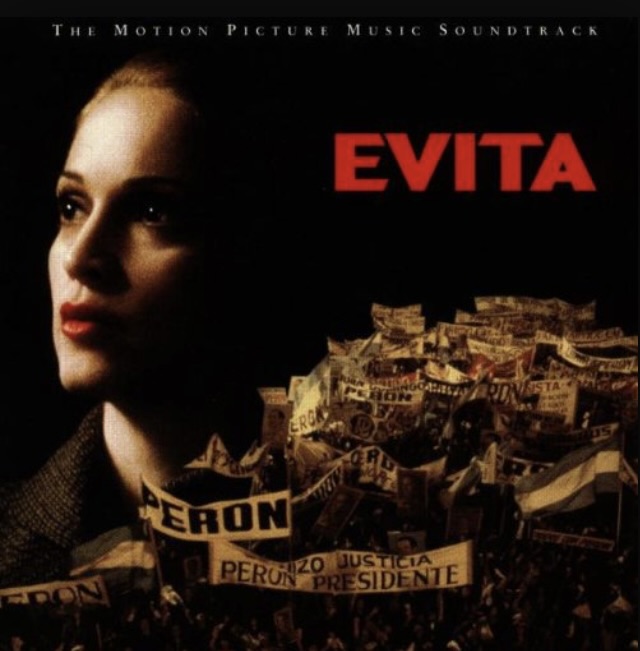
Artist: Madonna / Various Artists
Album: Evita: Music from the Motion Picture
Released: 28 October 1996, UK / 12 November 1996, US
Label: Warner Bros.
Format: Soundtrack album
Editions: Single-disc highlights edition and two-disc complete motion picture soundtrack
Film: Evita, directed by Alan Parker
Music: Andrew Lloyd Webber
Lyrics: Tim Rice
Key collaborators: Antonio Banderas, Jonathan Pryce, Jimmy Nail
Producers: Alan Parker, Andrew Lloyd Webber, David Caddick, Nigel Wright
Associated singles: “You Must Love Me”, “Don’t Cry for Me Argentina”, “Another Suitcase in Another Hall”
Within Madonna’s catalogue, Evita sits as a bridge between the ballad-led maturity of the mid-1990s and the spiritual, electronic transformation of Ray of Light. It foregrounds the voice before the rebirth. It places Madonna in a role about image, power and public myth, while also quietly reshaping how audiences heard her as a singer.
Evita is not a pause in Madonna’s evolution; it is one of its most important recalibrations. By stepping into Eva Perón’s story, Madonna sharpened her vocal authority, deepened her screen presence and moved towards a more reflective phase of her work. The album belongs to theatre, cinema and pop at once, but its place in her catalogue is clear: this is Madonna turning performance into transformation, and transformation into proof.
Singles
The singles from Evita present the soundtrack through its most emotionally direct and recognisable moments. “You Must Love Me” introduced a new song written for the film, giving Madonna a fragile, intimate centrepiece. “Don’t Cry for Me Argentina” connected her to the musical’s most famous anthem, while “Another Suitcase in Another Hall” drew attention to the quieter ache within the score.
Together, these releases framed Evita not only as a film soundtrack, but as a major vocal statement. They allowed Madonna to move beyond the language of pop single campaigns and into something more theatrical: less club floor, more balcony, spotlight and confession.
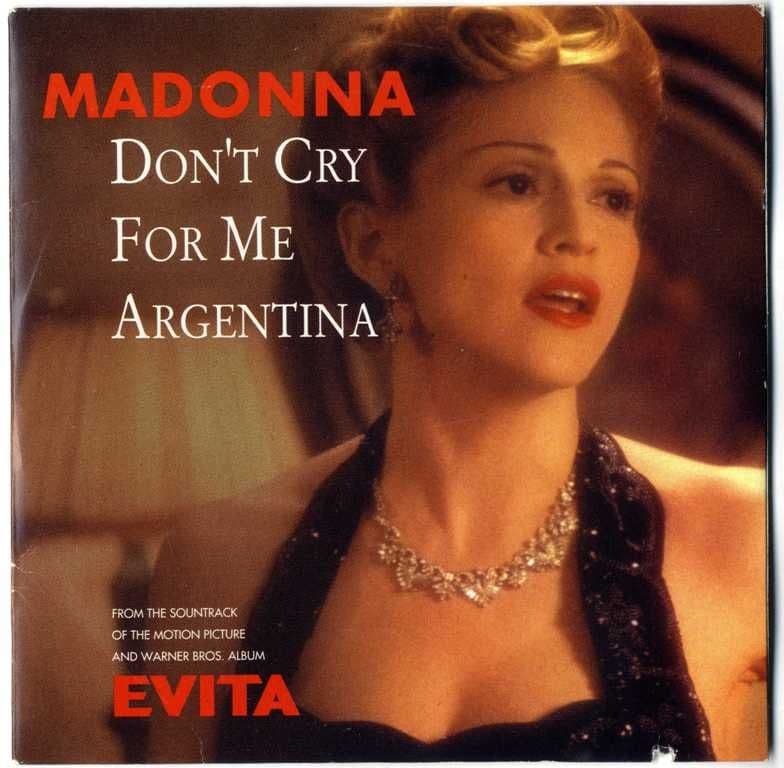
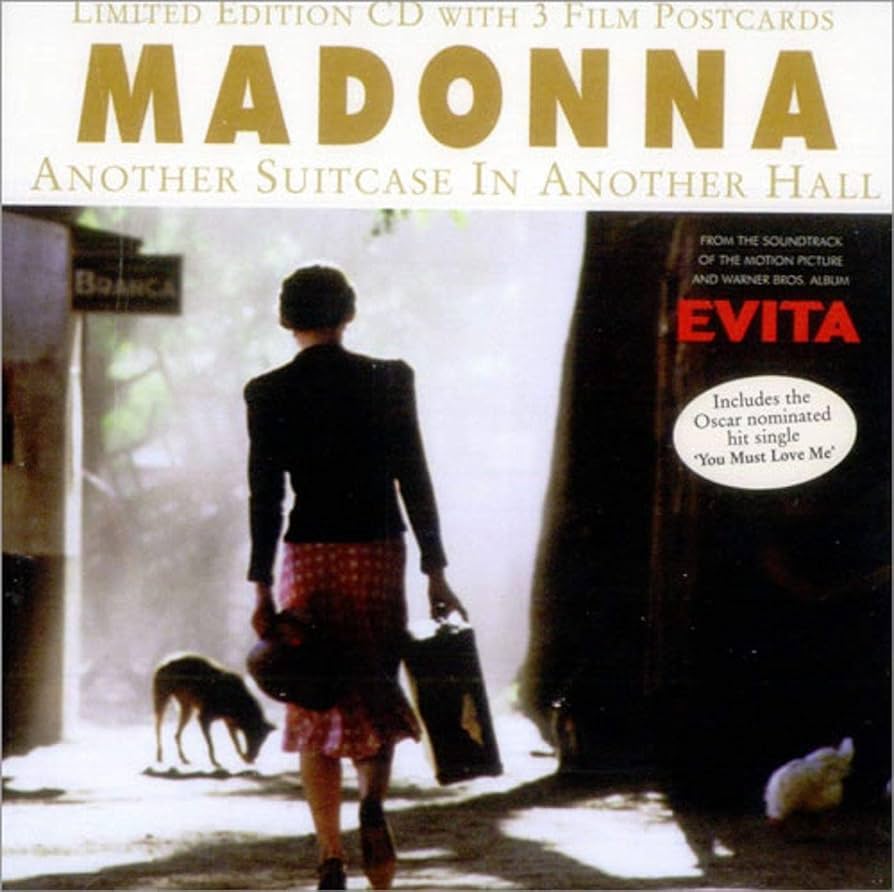
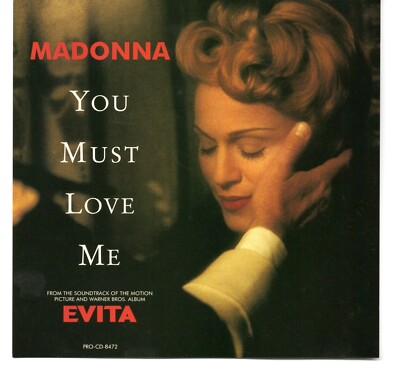
The Evita singles capture Madonna at a rare point of stillness and discipline. They do not chase reinvention through shock or sound alone; they reveal it through interpretation. In these songs, Madonna becomes both performer and character, using restraint, theatre and emotional clarity to expand what a Madonna single could be.
Visuals
The visual world of Evita is built around cinema, spectacle and political iconography. Madonna’s image is transformed through period costume, blonde precision, military formality, balcony poses and devotional light. The familiar Madonna iconography remains, but it is filtered through Eva Perón’s public mythology: saint, star, strategist, symbol.
This era replaces pop-video provocation with filmic authority. The styling is controlled and immaculate, often framed through gold, cream, black and shadow. Madonna appears less like a pop star visiting a role and more like someone studying the machinery of power from inside the frame.
The Evita visuals are essential to the album’s place in Madonna’s catalogue. They show her surrendering to character while still understanding the force of her own image. The result is one of her most elegant visual transformations: historical, cinematic and severe, with every gesture arranged like theatre under glass.
 MLVC
MLVC 