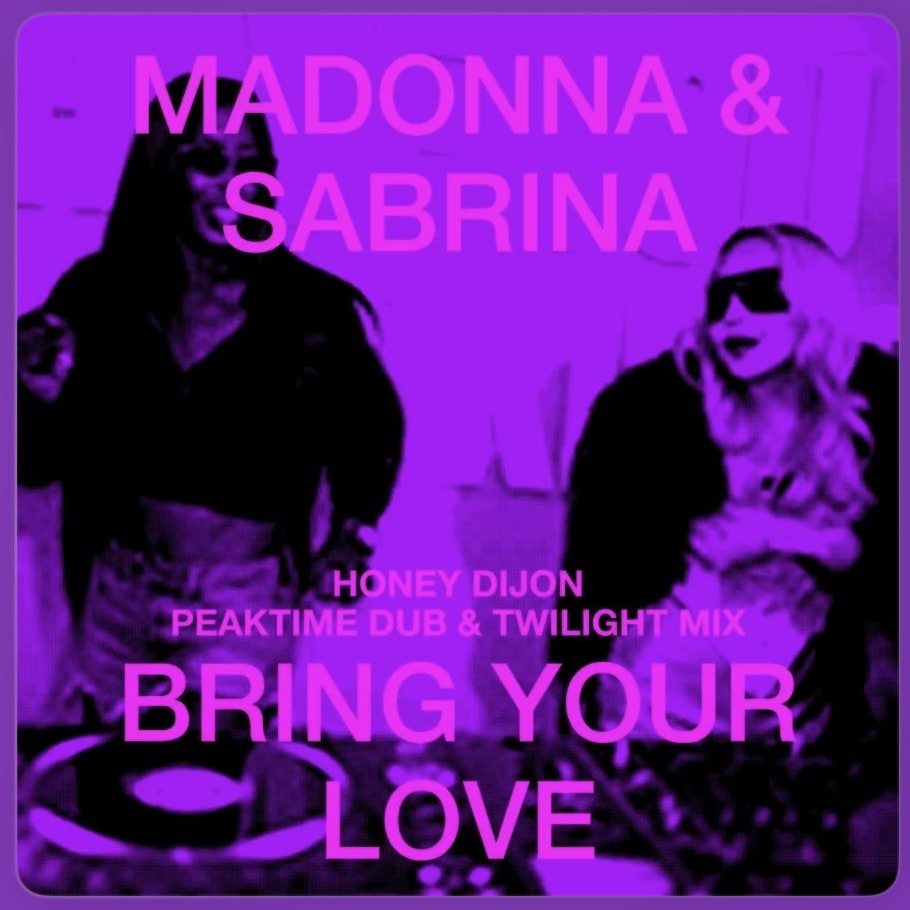
Madonna’s current single Bring Your Love, her collaboration with Sabrina Carpenter, has already arrived with the gloss of a major pop event.
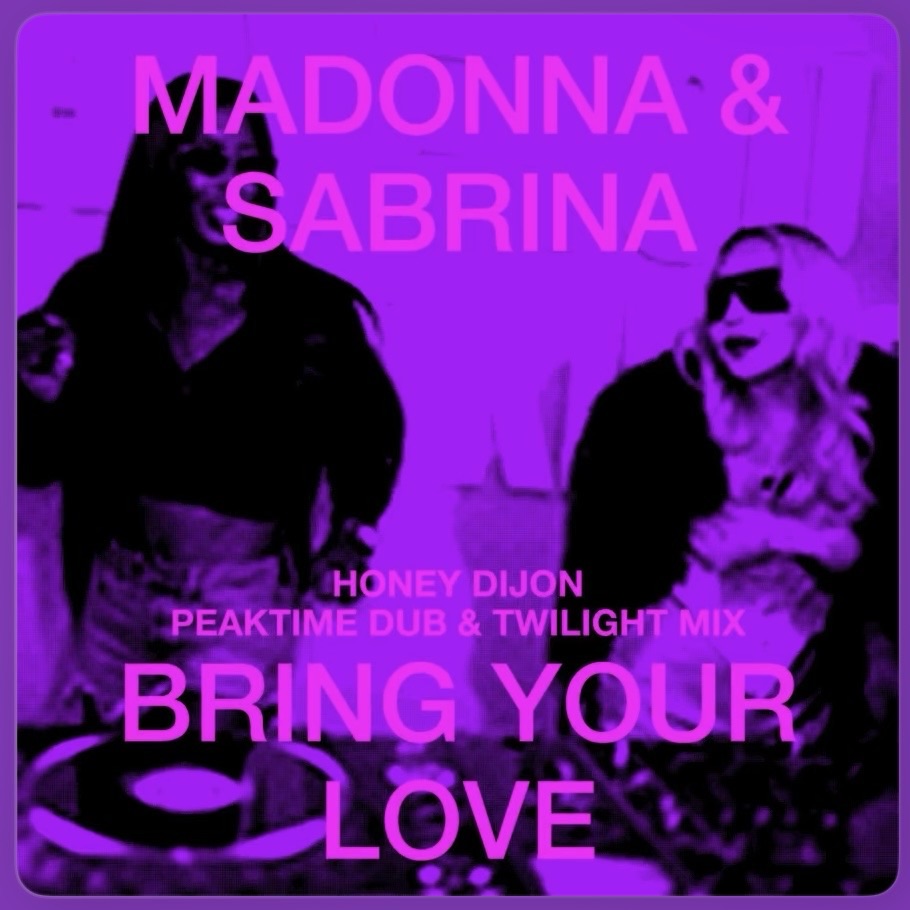
Now Honey Dijon has pulled it into a different room: lower ceiling, heavier bass, fewer explanations required. Released as Bring Your Love (Honey Dijon Remixes), the new package includes the Peaktime Dub Remix and the Twilight Mix, extending the track beyond single-release brightness and back into the living language of the club.
That distinction matters. Madonna has never treated the remix as decorative furniture. Across her career, remixes have often acted as parallel texts: versions that reveal another muscle in the song, another temperature, another possible audience. With Bring Your Love, Honey Dijon does not simply dress the track differently. She changes its working conditions. The song becomes less about arrival and more about duration, less pop announcement and more dancefloor architecture.
The Peaktime Dub Remix does what its title promises.

It feels designed for the point in the night when subtlety has removed its earrings and gone home. The vocal presence is reduced, the pulse pushed forward, and the track is allowed to work as a physical object. In dub form, Bring Your Love becomes less lyrical statement than command signal: fragments, rhythm, pressure, release. Madonna’s voice has always known how to survive being cut, looped, delayed and thrown back across a room.
Here, that instinct is honoured rather than polished away.
The Twilight Mix suggests another kind of club hour. Not quite peak, not quite comedown, it sits in the charged space between movement and memory. Where the Peaktime Dub sharpens the track for impact, the Twilight Mix gives it room to breathe. It stretches the atmosphere around the song, letting the record feel less like a fixed pop single and more like something passing through different lights.
Honey Dijon is a particularly meaningful figure to bring into this moment.

A Chicago-born DJ, producer and remixer, she is closely associated with house music, queer club culture, fashion and the continuing visibility of Black and trans creative lineages within dance music. Her presence on a Madonna single is not just a credible club stamp. It places Bring Your Love inside a deeper conversation about where pop dance music comes from, who built its rooms, and why those rooms still matter.
There is also continuity here. Honey Dijon previously remixed Madonna’s I Don’t Search I Find, a track that itself looked back towards classic house textures while sitting inside the icy theatre of Madame X. Her return for Bring Your Love feels less like a one-off booking and more like a continuation of Madonna’s long relationship with DJs as interpreters, collaborators and cultural translators.
For Sabrina Carpenter, the remix package also alters the frame. In the original single, the Madonna/Sabrina pairing carries the obvious intrigue of generational exchange. In Honey Dijon’s hands, that exchange becomes less about age or pop hierarchy and more about transmission: how songs move from radio to runway, from streaming platform to club system, from celebrity event to shared physical experience.

What makes these remixes useful is that they do not ask Bring Your Love to behave politely. They return it to heat, repetition and function. They remind us that Madonna’s dance records are rarely only songs. They are rooms, rituals, entrances, exits, mirrors and sometimes traps. Honey Dijon understands that. She does not flatten the single into nostalgia-house or overburden it with reverence. She gives it work to do.
With Bring Your Love, the campaign continues to widen. The single is no longer just a Madonna and Sabrina Carpenter moment. It is now a club proposition, and Honey Dijon knows exactly where to place the lights.
 Madonna
Leave a comment