Grindr as a Queer Cultural Stage
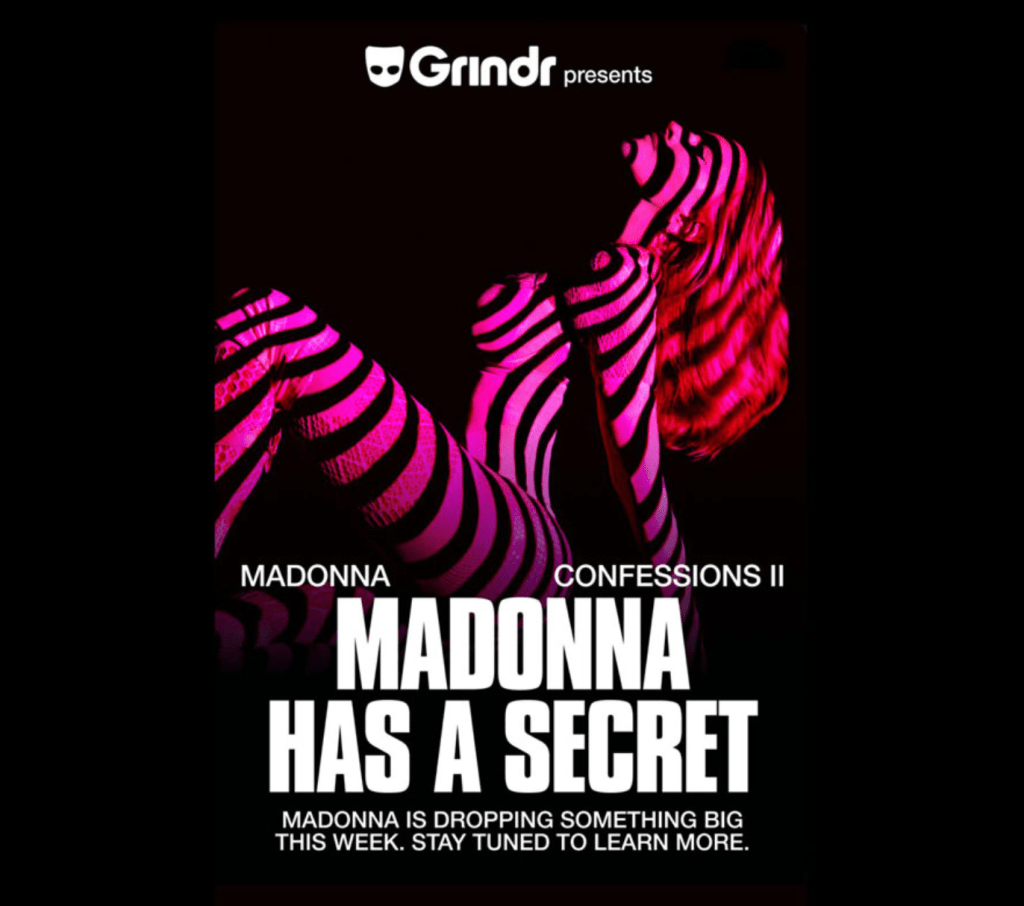
Madonna has never treated promotion as a neutral act. A new release is rarely just a new release. It is a doorway, a dare, a performance space. With Confessions II, her collaboration with Grindr turns that instinct into something sharply contemporary: the album is not simply being advertised to queer audiences, it is being placed inside one of queer culture’s most recognisable digital rooms.
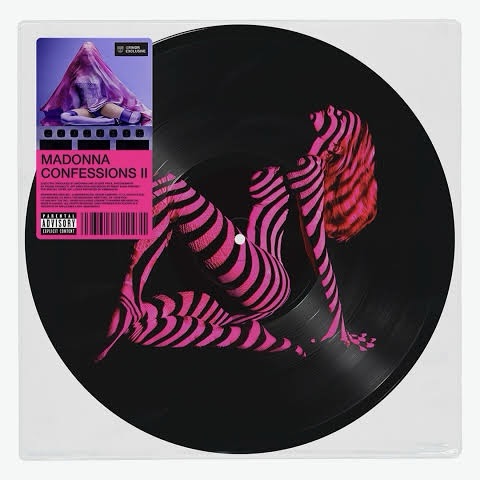
Grindr’s own campaign frames Confessions II as happening “inside” the app, with exclusive content, behind-the-scenes access and a limited-edition vinyl picture disc connected to the release. The language is knowingly theatrical: the grid becomes a dancefloor, the app becomes a gayborhood, and Madonna enters not as a distant pop monument but as a presence inside the architecture of queer exchange.
That matters. Grindr is not just a platform for dating or desire. It is a social space, a coded map, a private-public square where identity, humour, flirtation, performance and vulnerability all move at speed. By choosing Grindr as part of the Confessions II launch, Madonna is not borrowing queer culture as decoration. She is staging the work within a space already shaped by queer language, bodies and behaviour.

The filmed Grindr conversation extends that idea. Reports describe Madonna speaking with queer creatives including Bob the Drag Queen, Jeremy O. Harris and Raul Lopez in a deliberately candid discussion about sex, attraction and desire. Predictably, the headlines have gathered around the most provocative answers, but the more interesting story is the setting itself: Madonna placing confession, sexuality and queer wit at the centre of the campaign rather than smoothing them into something more polite.
In that sense, Confessions II feels less like a conventional era and more like a movement through spaces: club, app, interview, rumour, remix, vinyl, feed. The grid becomes another stage. The conversation becomes another performance. The campaign understands that queer culture does not only live in nightclubs or archives; it also lives in notifications, profiles, glances, jokes and digital proximity.

Madonna has always known that the frame is part of the art. With Grindr, she is not simply asking where her audience is. She is asking what happens when the launch itself enters the room.
 MLVC
MLVC 
Leave a comment